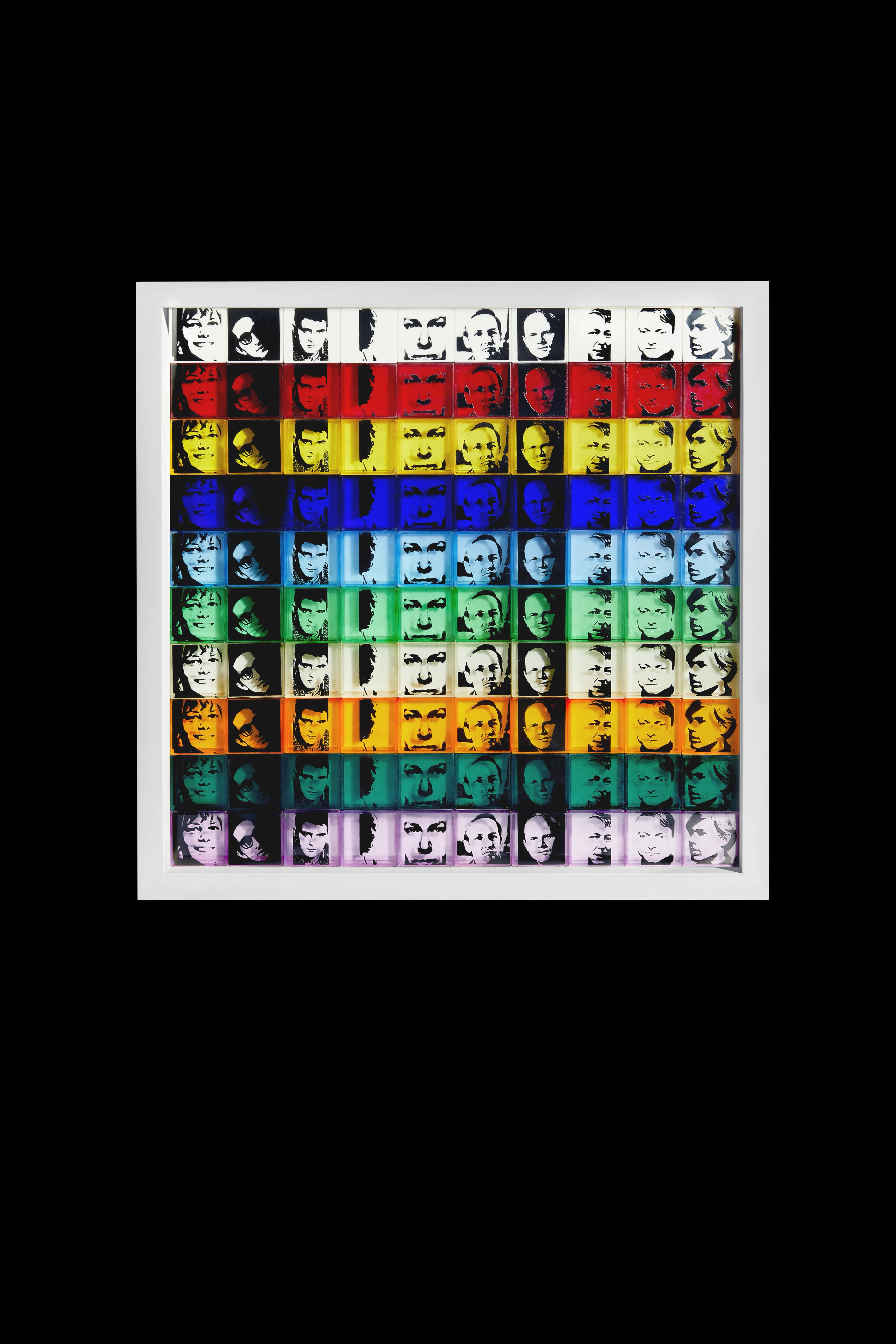
Asset Class: Fine Art
Loans Against Fine Art
Discreet lending of £61,000 to £2,000,000 secured against post-war, contemporary and modern works by artists including Warhol, Basquiat, Richter, Hockney and Picasso, exclusively for certified high-net-worth individuals.
Who this is for
Liquidity against the art you already own
SAFE Lending Co provides direct art-backed loans across the UK, secured against post-war, contemporary and modern works by artists including Warhol, Basquiat, Richter, Hockney and Picasso. Loans start at £61,000 and scale to £2,000,000, with terms of 3 to 12 months and no early repayment fees after the initial 3-month period.
Our clients are collectors and asset-rich individuals who want to release capital from their collection without selling: to bridge a property transaction, settle a tax bill, fund a business opportunity, or acquire another work. The art stays in museum-grade, insured storage. You retain ownership, confidentiality and any market upside in the meantime.
A loan is also the discreet route. Selling at auction creates a permanent public record, and a weak result can damage a work’s market. Borrowing against it leaves that history untouched. Roughly 85 per cent of clients redeem their assets at the end of the term.
What we lend against
Post-war and contemporary blue-chip works, modern masters, important editions, sculpture and photography. Each work valued on its own merits: authenticity and provenance first, with condition and market depth weighed carefully.
Post-war and contemporary
Andy Warhol, Jean-Michel Basquiat, Gerhard Richter, Roy Lichtenstein, Jeff Koons, Damien Hirst, Yayoi Kusama, George Condo, Banksy, Christopher Wool and Cy Twombly. The deepest, most liquid sector of the market and the core of what we lend against.
Modern masters
Pablo Picasso, Claude Monet, Henri Matisse, Marc Chagall, Joan Miró, Fernand Léger and Amedeo Modigliani. Works with secure attribution, sound condition and clean provenance are valued against recent results at the major evening and day sales.
British and European modern
David Hockney, Francis Bacon, Lucian Freud, Bridget Riley, Frank Auerbach, Peter Doig and L.S. Lowry. We assess period, subject, medium and exhibition history alongside the artist’s current auction market.
Blue-chip prints and editions
Signed, numbered editions and important print portfolios by Warhol, Hockney, Hirst, Kusama, Banksy and Lichtenstein. Edition size, publisher, condition and the presence of original documentation drive value within an editioned market.
Sculpture and three-dimensional work
Cast and unique sculpture by Koons, Hirst, Henry Moore, Barbara Hepworth, Giacometti and Botero. Edition number, foundry, patina and provenance are weighed alongside the artist’s wider market.
Photography and works on paper
Important photography by Andreas Gursky, Cindy Sherman and Richard Prince, and significant drawings and works on paper. Vintage versus later prints, edition and condition are decisive in this category.
Valuation
How your art is valued
Every valuation begins with authenticity and clear title, then weighs provenance, exhibition history, condition and the artist's current market, benchmarked against live results from Christie's, Sotheby's and Phillips.
Authenticity, catalogue raisonné and the estate
Inclusion in the artist’s catalogue raisonné, recognition by the relevant estate or foundation, and an unbroken chain of authentication are the foundation of any art valuation. We verify attribution before discussing a loan-to-value, not after.
Provenance, exhibition and literature
Documented ownership history, exhibition record at recognised institutions and references in the literature materially strengthen value and liquidity. We also run an Art Loss Register check to confirm clear title before lending.
Condition and conservation
Condition is decisive for art. We commission or review a professional condition report covering surface, support, restoration and any prior conservation, since condition issues can move value by a wide margin even for a major name.
Live auction and private-treaty comparables
We benchmark against current results from Christie’s, Sotheby’s and Phillips, plus recent private-treaty sales through established galleries and dealers. You see the comparable lots behind your valuation, and we value conservatively, on realistic realisable price.
Storage
How your art is stored
For the duration of the loan, your work sits in a museum-grade, climate-controlled, insured fine-art store, handled only by trained art handlers, condition-reported, and inspectable on request, with the loan itself kept confidential.
Museum-grade, climate-controlled storage
Works are held in a temperature- and humidity-controlled fine-art store under your name, fully insured to agreed value for the duration of the loan. Light, climate and handling are managed to conservation standards throughout.
Specialist art handling and transport
Collection, crating and transport are carried out by trained art handlers using purpose-built vehicles. Works are condition-reported on intake and movement, and handled only by specialists for the life of the loan.
Confidentiality and inspection rights
Storage location and the loan itself are confidential. A loan leaves no public sale record against the work, unlike a failed or low auction result, which can affect an artist’s market. You may inspect your work with 48–72 hours’ notice.
Pawn or sell?
Selling makes it public. Pawning keeps it private.
Selling a work, at auction or privately, ends your position and creates a price record that follows the piece. When the need is short-term liquidity, a confidential loan secured against the same work gives you the cash you need while leaving ownership, market history and future upside intact.
Auction sale costs the seller commission and charges, and a work that fails to sell, or sells below estimate, leaves a public record that can depress its future value and the artist’s wider market.
Private-treaty sale through a gallery is more discreet but typically takes months and is priced to leave the dealer a margin.
A loan against your art is confidential and leaves no sale record, preserving the work’s market history and your future options.
You retain ownership and any market upside, and redeem the exact work at the end of the term rather than buying back into a rising market.
Figures are indicative market norms, not specific to any individual sale. Speak to a qualified tax adviser for guidance on the tax treatment of selling art in your circumstances.
Related reading
Guides to help you weigh up borrowing against your assets.
Art Lending: Common Questions
Answers to the questions we hear most often from clients borrowing against fine art.
Post-war and contemporary works (Warhol, Basquiat, Richter, Koons, Hirst, Kusama, Banksy), modern masters (Picasso, Monet, Matisse), British and European modern (Hockney, Bacon, Riley), blue-chip prints and editions, sculpture and important photography. Minimum value £61,000.
Through inclusion in the artist’s catalogue raisonné, recognition by the relevant estate or foundation, documented provenance and, where appropriate, specialist examination. We confirm attribution before agreeing a loan-to-value, and run an Art Loss Register check to verify clear title.
Loans run from £61,000 to £2,000,000, generally between 40 and 70 per cent of open market value. Art is typically valued conservatively within that range because realisation can take longer than for other assets, so loan-to-value reflects realistic resale rather than insurance or replacement figures.
Significantly. A documented ownership chain, exhibition record at recognised institutions and references in the literature all strengthen both value and liquidity. Gaps in provenance or unresolved title questions reduce what we can lend until they are clarified.
Yes. We lend against signed, numbered editions and important portfolios by Warhol, Hockney, Hirst, Kusama, Banksy and Lichtenstein. Edition size, publisher, condition and original documentation are the main value drivers within an editioned market, and we benchmark against recent print-sale results.
We review or commission a professional condition report covering surface, support, any restoration and prior conservation. Condition can move value by a wide margin even for a major artist, so it is assessed carefully and discussed with you transparently during valuation.
By artist, period, medium, subject, size, condition and provenance, benchmarked against current results from Christie’s, Sotheby’s and Phillips and recent private-treaty sales through established galleries. You see the comparable lots used, and we value on realistic realisable price.
In a museum-grade, climate-controlled fine-art store under your name, fully insured to agreed value, handled only by trained art handlers. Works are condition-reported on intake, and you may inspect your work with 48–72 hours’ notice.
Yes. A loan is confidential and leaves no public sale record against the work. Selling at auction creates a permanent price record, and a result below estimate, or a failure to sell, can damage a work’s market and the artist’s wider standing. A loan preserves your options.
Yes. After the minimum 3-month term you can redeem your work at any time with no early repayment fees or exit charges. Repay the outstanding balance and accrued interest and we arrange specialist return or collection.
Provided authenticity and title are clear, we can typically value and fund an art loan within 5 to 14 working days. Works requiring fresh authentication, a condition report or provenance research may take longer, and we will tell you the likely timeline up front.
We always explore extension options first. If the loan is not repaid by the end of the agreed term, the work may be sold to recover the debt, discreetly via private treaty through an established gallery, or by auction. Any surplus above the outstanding balance is returned to you.
Ready to discuss a loan against your art?
Submit an enquiry with the artist, title, provenance and a few photographs. We respond within 24 hours and arrange a free, confidential valuation. No commitment, no fee.